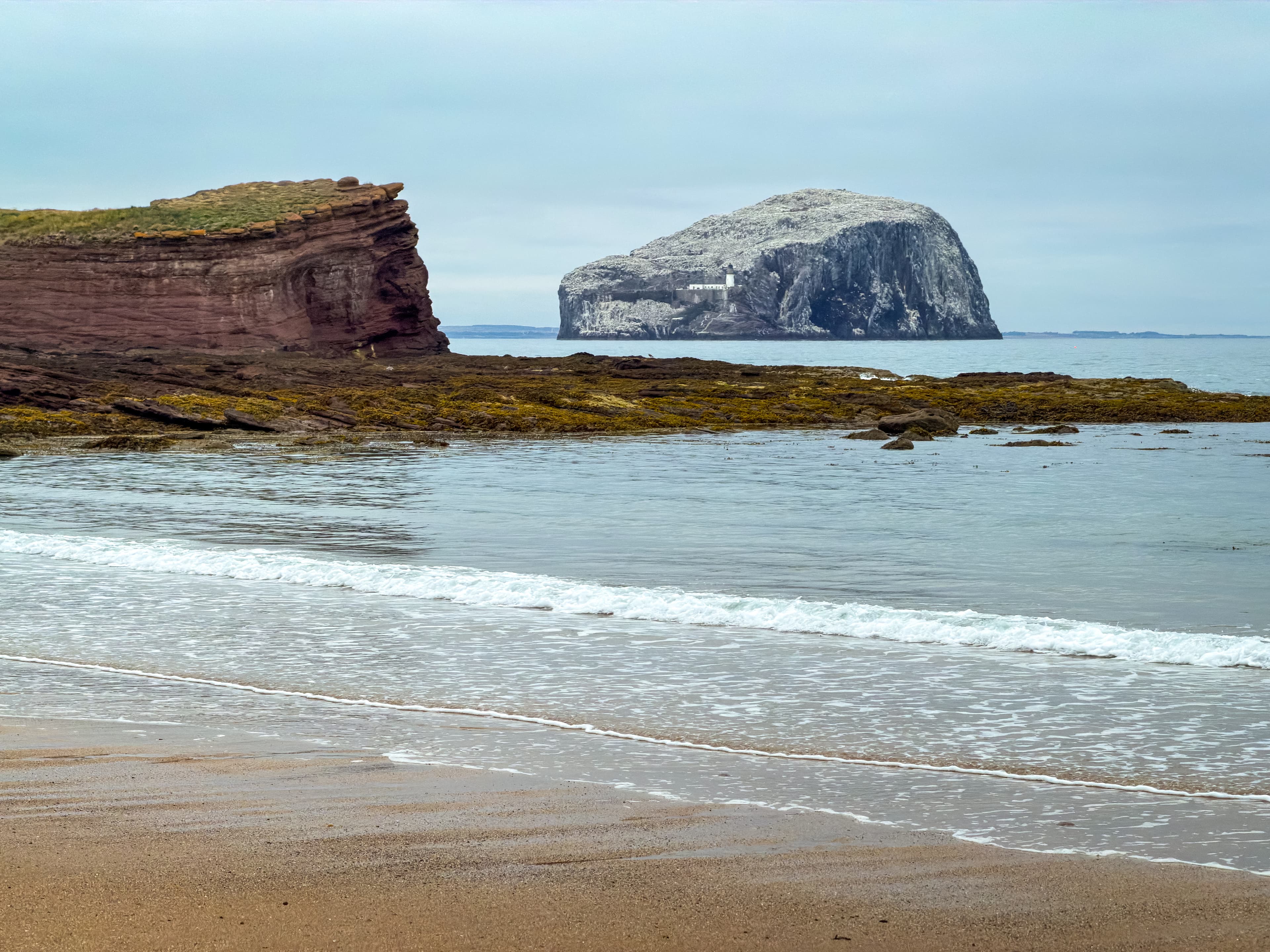
Seacliff is the beach you have to know about to find. It sits below Tantallon Castle a few miles east of North Berwick, at the end of a private road that most people drive straight past, and it keeps the crowds away by charging a small fee at a barrier to get in. What waits at the bottom is worth the detour: red sandstone underfoot, rock pools, a harbour carved into solid rock, and the great white bulk of Bass Rock sitting just offshore.
Bass Rock and the red shore
Two things give Seacliff its character. The first is the rock itself. The cliffs, the stacks and the sand here are red sandstone, which lends the whole beach a warm, rust-tinged colour that sets it apart from the pale golden bays further along the coast. The second is the view out to sea. Bass Rock, the volcanic island a couple of miles offshore, is home to one of the largest colonies of Northern gannets anywhere in the world, and through the summer the birds turn its slopes brilliant white. A lighthouse, now automated, sits on its landward side. On a clear day you can watch the gannets wheeling above the rock from the sand.
The smallest harbour
At the western end of the beach, an outcrop of red rock known locally as the Gegan hides Seacliff's strangest feature. Cut into the stone is a tiny harbour, said to be the smallest in the UK, with an entrance only a couple of metres across. It was blasted out of the rock in 1890 by the estate's owner, using a steam engine and compressed air, and it is easy to miss until you are almost standing over it. You need a low tide to reach it, picking your way across the sand and rock pools, but it is a remarkable thing to come upon. A small fishing boat is often moored inside.
Getting there
Seacliff is reached from the A198, turning off at Auldhame a few miles east of North Berwick, where a narrow private road leads down through the trees to the beach. The turning is easy to miss, on a bend by a farm.
By public transport, the nearest town is North Berwick, served by trains from Edinburgh and by East Coast Buses. Seacliff itself is not on a bus route, though some services will drop you near the top of the lane if you ask, leaving a walk down to the beach.
On the beach
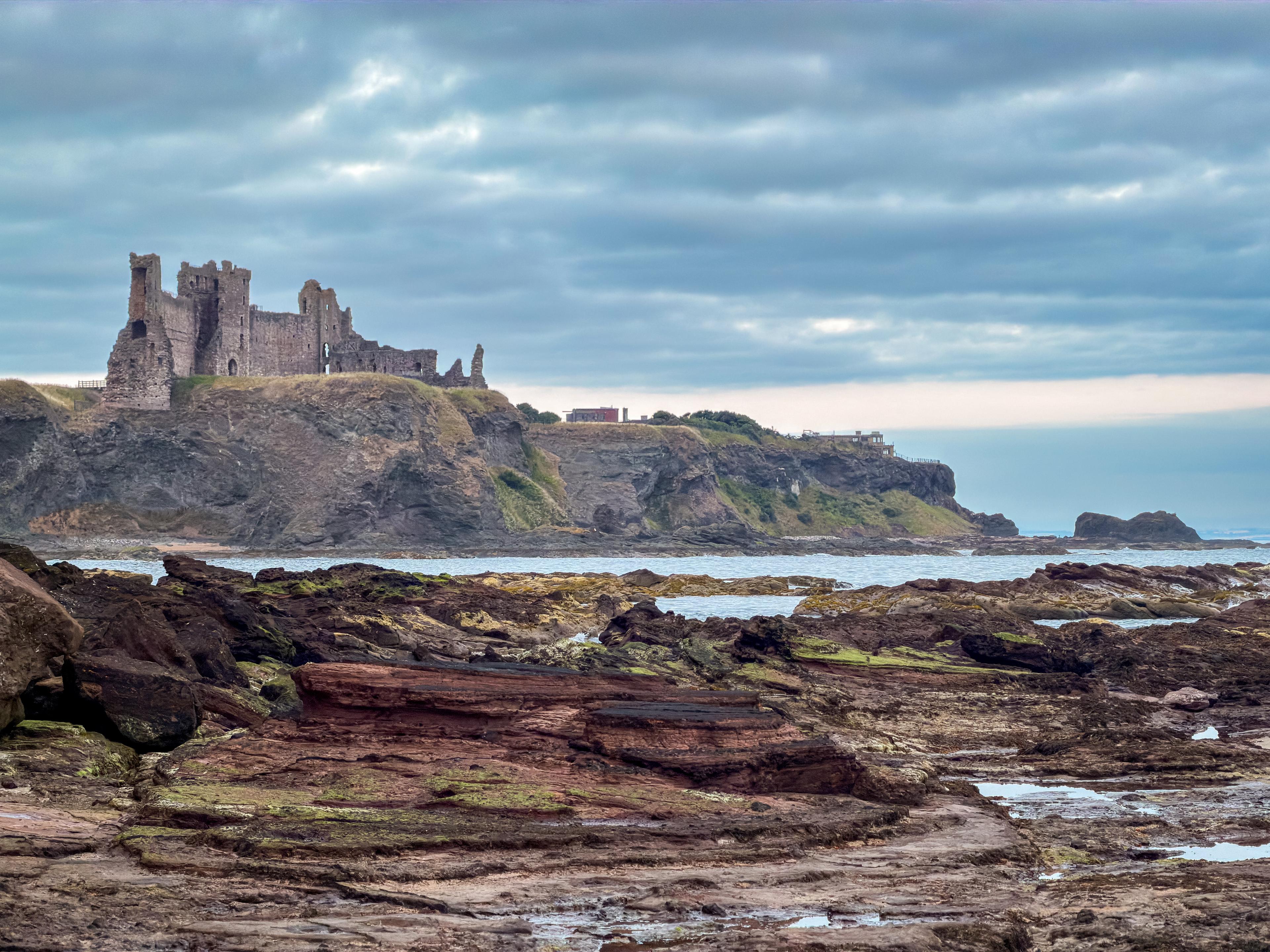
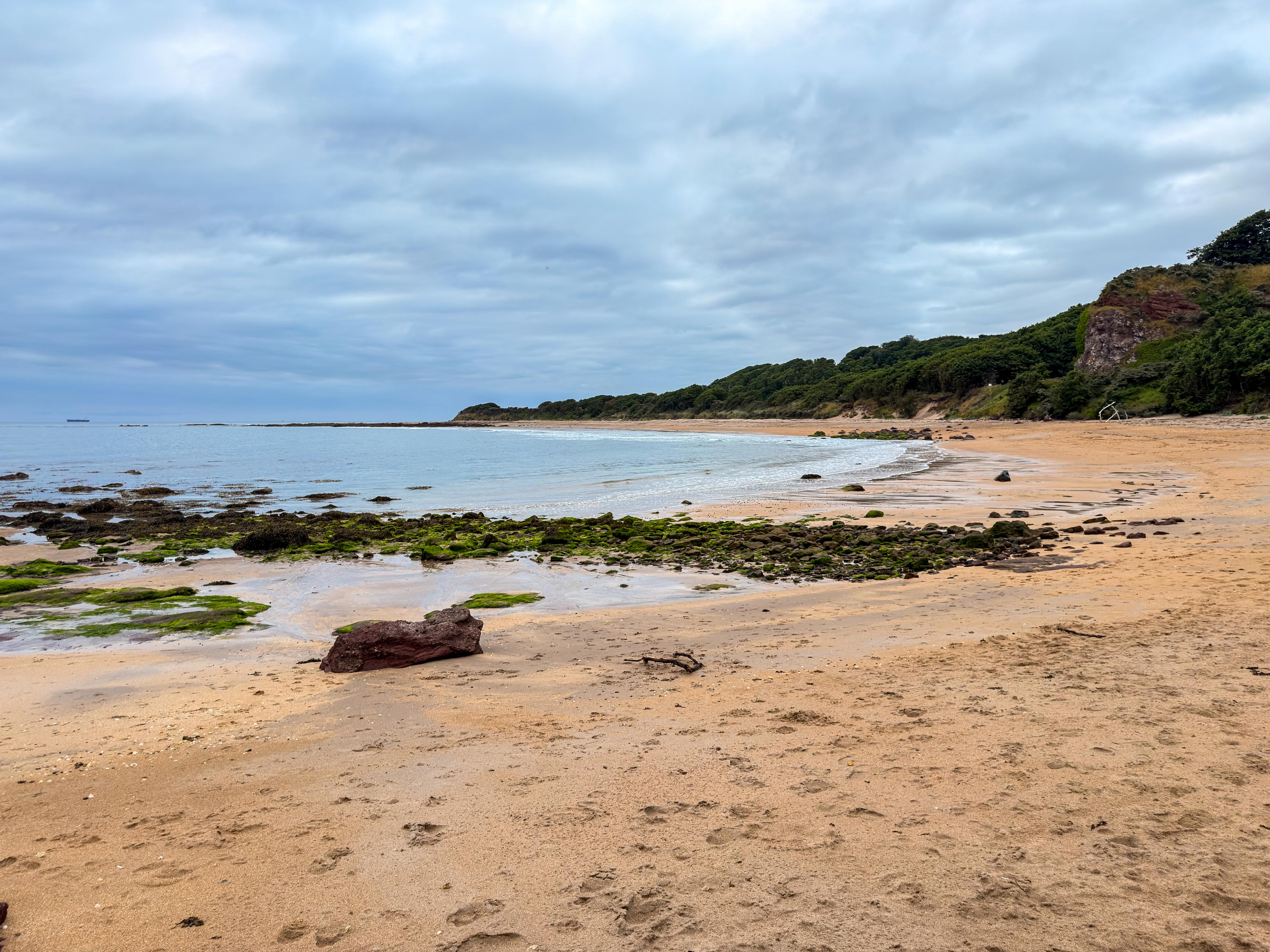
It is a short walk down from the car park to the sand. The beach is wide and quiet, backed by low cliffs and woodland, with rock pools among the sandstone and that constant view of Bass Rock offshore. At low tide you can walk west along the shore towards the foot of Tantallon Castle, which rises on its cliff at the far end, though you cannot reach the castle itself this way. It is a beach for walking, rock pooling and taking in the view rather than for facilities, of which there are none to speak of, so bring what you need.
Practical information
Parking: Private car park reached through a barrier, five pounds for the day, payable by card, phone or cash. The car park closes at sunset.
Getting in: The access road is narrow, steep, bumpy and winding. Drive slowly in both directions.
On site: Signage asks for no fires and no overnight stops. There are no facilities, so bring everything you need and take your rubbish home.
Tides: Come at low tide to reach the harbour and to walk west towards Tantallon. Check the tide times for North Berwick before you set out.
Make a day of it
Seacliff sits within easy reach of the rest of this stretch of coast. Tantallon Castle, in the care of Historic Environment Scotland, is a mile back along the A198 and offers the closest land view of Bass Rock. North Berwick, a short drive west, has the Scottish Seabird Centre, from which boat trips run out around and onto Bass Rock in season. The wide sands of Tyninghame lie just to the south.
